

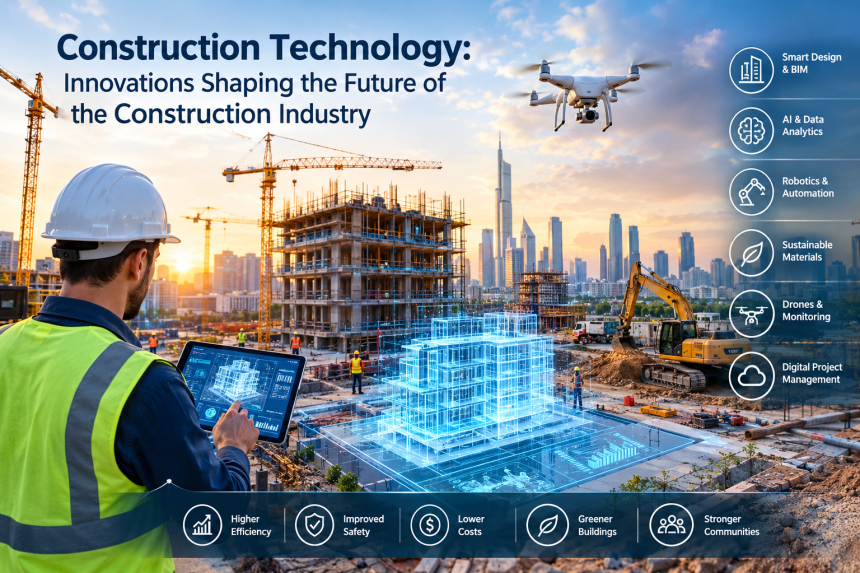
The way we design, build, and maintain buildings is changing faster than ever.From modern homes and towering skyscrapers to bridges, highways, and hospitals, technology is making construction more efficient, safer, and environmentally friendly. What once required weeks of manual work can now be completed in less time with the help of advanced machinery, digital tools, and innovative building materials.
But what does this transformation mean for ordinary people? How can How can modern construction techniques lower costs, enhance building quality, and promote the development of safer, more sustainable communities? These questions matter because construction affects nearly every part of our daily lives, including the homes we live in, the roads we travel on, and the workplaces where we spend our time.
Construction technology brings together equipment, software, materials, and practical techniques to improve the entire building process. Think of it as the engine behind a modern building project: it helps different parts work together, much like the components of a well-organized machine. Understanding these developments allows homeowners, businesses, contractors, and communities to make better decisions about the spaces they create.
1. What Is Construction Technology?
Construction technology refers to the tools, equipment, materials, software, and methods used to plan, design, build, and maintain structures. Its main purpose is to improve how construction projects are completed while balancing quality, safety, time, and cost.
In the past, many construction activities depended heavily on manual labor, paper-based drawings, and traditional building techniques. Although these Although traditional construction methods remain valuable, modern projects increasingly integrate digital planning, automated machinery, and data-driven strategies to improve efficiency, accuracy, and overall building performance.
For example, a contractor building a residential house can use specialized software to prepare digital drawings, calculate material requirements, estimate expenses, and organize workers before construction begins. On-site equipment can then help move materials, dig foundations, and lift heavy structural components.
Key areas of construction technology include:
- Digital design and project planning.
- Modern construction machinery and robotics.
- Advanced building materials.
- Three-dimensional printing.
- Smart buildings and connected devices.
- Artificial intelligence and data analysis.
- Sustainable construction methods.
- Safety monitoring and quality control.
These technologies are not limited to large companies or expensive skyscraper projects. Smaller contractors and homeowners can also benefit from accessible planning software, energy-efficient materials, and improved construction equipment.
The important point is that technology does not necessarily replace traditional construction knowledge. Instead, it can make that knowledge more effective by helping professionals work with greater accuracy and confidence.
2. The Evolution of Modern Building Methods
Construction has developed significantly over thousands of years. Early builders relied on basic hand tools, natural materials, and practical knowledge passed between generations. As communities expanded, new methods emerged to support larger and more complex structures.
The Industrial Revolution introduced machinery that changed the pace of building. Steam-powered equipment, improved transportation, steel production, and modern cement made it possible to construct stronger structures on a larger scale.
During the twentieth century, electric tools, tower cranes, reinforced concrete, and standardized building components became increasingly important. These advancements enabled construction teams to undertake and successfully complete projects that would have been challenging, if not impossible, with traditional methods.
Today, digital technology is adding another layer to this evolution. Architects can create detailed three-dimensional models, engineers can test designs virtually, and project managers can monitor progress through connected software systems.
From traditional methods to digital construction
Consider how a building project might have been managed several decades ago. Plans were often printed on paper, changes had to be communicated manually, and workers could discover design conflicts only after construction had started.
Modern digital systems can identify many of these conflicts before work begins. If a ventilation duct overlaps with a structural beam in a digital model, the design team can identify the problem and revise the plans before it causes delays on-site.
This transformation highlights a fundamental principle: successful construction depends not merely on speed, but also on efficiency, precision, and the effective application of modern techniques.It is also about identifying problems earlier, using resources wisely, and making informed decisions.
However, traditional craftsmanship remains essential. Skilled workers still need to understand materials, structural behavior, installation techniques, and local building conditions. The strongest results often come from combining practical experience with modern tools.
3. Building Information Modeling and Digital Design
Building Information Modeling (BIM) stands out as one of the most transformative innovations shaping the modern construction industry.. It allows project teams to create a shared digital representation of a building that contains more information than an ordinary drawing.
A BIM model can include walls, floors, doors, windows, electrical systems, plumbing, ventilation, and structural components. Depending on the software and project setup, it may also contain information about costs, materials, maintenance schedules, and construction timelines.
How BIM improves project planning
Imagine planning a large commercial building without a clear way to coordinate the architect, structural engineer, electrician, plumber, and construction manager. Each professional might use separate drawings, creating opportunities for misunderstandings.
BIM brings these different elements into a coordinated model. Team members can review the same project information, identify design conflicts, and discuss changes before they affect the construction site.
For example, if an electrical cable route conflicts with a water pipe, the team can adjust the design digitally rather than discovering the issue during installation.This approach minimizes rework, reduces material waste, and helps control labor costs, ultimately improving overall construction efficiency.
Benefits of digital modeling
- Better communication among project teams.
- More accurate material estimates.
- Earlier identification of design conflicts.
- Improved scheduling and cost planning.
- Easier preparation for future building maintenance.
Digital modeling is also useful after a project is completed. Facility managers may use the model to locate equipment, understand building systems, and plan repairs.
However, successful BIM implementation depends on accurate data, appropriate software, and comprehensive training for construction professionals.. If team members work with outdated models or fail to update changes, the technology can create confusion instead of preventing it.
4. Artificial Intelligence and Data-Driven Construction
Artificial intelligence, or AI, is beginning to influence how construction companies plan projects, evaluate risks, and manage resources. AI systems can analyze large amounts of information and identify patterns that may be difficult for people to recognize manually.
One practical application is project scheduling. Construction projects involve many connected activities, such as excavation, foundation work, structural framing, electrical installation, and finishing. A delay in one activity can affect several others.
AI-supported planning tools can examine schedules, available resources, weather information, and historical project data to help managers identify potential delays. These systems can also compare different schedules and suggest adjustments.
Predictive maintenance and equipment monitoring
Construction machinery is expensive, and unexpected equipment failure can interrupt an entire project. Sensors installed on certain machines can collect information about temperature, vibration, operating hours, and performance.
When combined with analytical software, this information can help maintenance teams recognize warning signs before a serious failure occurs. Regular inspections and professional judgment remain necessary, but early warnings can make maintenance more effective.
AI-assisted design and risk assessment
AI tools can also help engineers compare design alternatives, estimate material quantities, and identify possible safety concerns. Some systems analyze site photographs or sensor data to flag conditions that deserve further inspection.
However, AI should be treated as a decision-support tool rather than an unquestionable authority. Its recommendations depend on the quality of its data, and it may overlook unusual site conditions or local requirements.
Human professionals must verify important calculations, inspect actual construction conditions, and take responsibility for safety and compliance.
5. Robotics, Automation, and Advanced Machinery
Construction sites involve physically demanding tasks, repetitive activities, and work in challenging environments. Robotics and automation can help reduce some of these difficulties while improving consistency and productivity.
Modern construction machinery includes automated excavators, robotic layout systems, material-handling equipment, and machines designed for specific tasks. Some technologies operate with direct human control, while others can perform limited activities automatically under supervision.
Robots on construction sites
Robotic systems can assist with bricklaying, concrete finishing, drilling, welding, and repetitive installation tasks. Their usefulness depends on the type of project, the site layout, and the amount of preparation required.
For example, a robotic layout device can project or mark precise positions for walls and other building elements using digital plans. This helps workers transfer measurements from a design to the physical site.
Robots may also perform certain tasks in hazardous or physically demanding locations, reducing workers’ exposure to some risks.
Drones and aerial monitoring
Drones have become valuable tools for surveying and monitoring construction projects. Equipped with cameras and suitable sensors, they can capture aerial images, document progress, and help teams inspect areas that are difficult to reach.
A drone survey can help compare actual site conditions with planned layouts. Repeated flights can also provide a visual record of progress, helping project managers identify areas that need attention.
Advantages and limitations
Automation can improve repeatability, reduce certain manual tasks, and support faster completion. However, advanced equipment may require substantial investment, specialist training, maintenance, and careful site preparation.
Not every construction project benefits equally from robotics. A large, repetitive development may justify automated equipment, while a small renovation may be more practical with conventional tools and experienced workers.
The goal is not to automate everything. It is to identify tasks where machinery can make work safer, more accurate, or more productive.
6. Three-Dimensional Printing and Prefabricated Construction
Three-dimensional printing and prefabrication are changing how some building components and structures are produced. Both approaches can move part of the construction process away from the traditional building site, although they work in different ways.
Three-dimensional printing in construction
Construction 3D printing uses specialized equipment to deposit material in successive layers according to a digital design. Some systems print with cement-based mixtures, while others use different materials for particular applications.
This method has attracted attention for producing certain walls, architectural components, and experimental or specialized structures. It can reduce the need for some conventional formwork and may allow unusual shapes to be created more easily.
However, printed components still need appropriate structural design, reinforcement where required, connections, weather protection, and compliance with building regulations. Printing a wall does not automatically complete a safe, habitable building.
Prefabrication and modular buildings
Prefabrication involves manufacturing building components away from the final construction site. These components might include wall panels, roof sections, bathroom units, or entire room modules.
Once manufactured, they are transported to the site and assembled according to the project design.
For example, a hotel developer may choose prefabricated bathroom units that arrive with many fixtures already installed. This can reduce the amount of work required in individual rooms and help standardize quality.
Why these methods matter
- They can shorten on-site construction time.
- Factory conditions can support consistent quality.
- Material use can be measured more accurately.
- Some activities can continue while site preparation takes place.
- Repetitive building components can be produced efficiently.
Despite these advantages, transportation costs, crane access, manufacturing capacity, and design limitations must be considered. Prefabricated components also require accurate measurements because mistakes can be expensive to correct once units arrive on-site.
7. Smart Materials and Modern Building Components
Building materials have a direct influence on a structure’s strength, comfort, durability, energy use, and maintenance needs. Advances in material science are giving construction professionals more choices than traditional brick, timber, concrete, and steel alone.
High-performance concrete
Specialized concrete mixtures can be designed to provide particular properties, including improved durability, workability, or resistance to certain environmental conditions.
Some high-performance mixtures are suitable for demanding structural applications, while other formulations focus on reducing permeability or extending service life. The correct mixture depends on structural requirements, exposure conditions, and applicable standards.
Self-healing materials
Certain experimental and commercial material systems are designed to repair small cracks or limit their development. Some concrete technologies use special additives, capsules, or bacteria-based processes to help seal cracks under suitable conditions.
These approaches may reduce maintenance requirements in particular applications, but they are not a universal solution for structural damage. Significant cracking still requires professional assessment.
Smart glass and responsive materials
Smart glass can change its light transmission or shading characteristics in response to electrical control or environmental conditions. In suitable buildings, it may help manage sunlight, glare, and cooling demand.
Other advanced materials include insulated panels, engineered timber, recycled construction products, and coatings designed to resist corrosion or weather damage.
Choosing materials responsibly
The newest material is not always the best option. Builders must consider local availability, installation requirements, expected lifespan, maintenance costs, climate, and environmental effects.
A material that performs well in a dry climate may require different protection in a humid or coastal environment. Similarly, a product with a higher purchase price may offer better long-term value if it lasts longer and needs fewer repairs.
Good material selection balances performance, cost, availability, and the needs of the people who will use the building.
8. Sustainable Construction and Energy Efficiency
Construction consumes substantial quantities of raw materials and energy. Buildings also use energy throughout their lifetimes for lighting, heating, cooling, ventilation, and equipment operation. Sustainable construction aims to reduce these impacts while maintaining safety, comfort, and affordability.
Energy-efficient building design
One of the most effective approaches is to reduce energy demand before adding complex technology. Proper insulation, suitable windows, shading, airtight construction, and natural ventilation where appropriate can help maintain comfortable indoor temperatures.
For instance, a house designed to limit excessive heat gain may require less air conditioning during hot weather. In colder regions, effective insulation can reduce heating needs.
Solar panels, efficient lighting, heat pumps, and smart controls can provide additional benefits when they suit the building and local conditions.
Reducing waste and reusing materials
Construction waste often includes packaging, timber offcuts, broken masonry, concrete, metal, and unused products. Better planning can reduce the amount of material ordered unnecessarily.
Materials that remain suitable for use may be reused or recycled, depending on their condition and local facilities. Concrete waste, for example, can sometimes be processed for use as recycled aggregate in appropriate applications.
Water conservation
Water-efficient fixtures, rainwater collection, leak detection, and suitable wastewater reuse systems can help reduce water consumption. These measures are particularly valuable in regions where water supplies are limited.
Life-cycle thinking
Sustainable construction involves more than choosing an environmentally friendly product. A building’s environmental impact depends on material production, transportation, construction, maintenance, energy consumption, and eventual renovation or demolition.
A low-cost material may require frequent replacement, while a more durable alternative may perform better over several decades. Evaluating the full life cycle helps project teams make more responsible decisions.
Sustainability is not simply a trend. It is a practical approach to creating buildings that use fewer resources, cost less to operate, and provide healthier spaces for future generations.
9. Construction Safety and Quality Control
Construction work can involve heavy machinery, electrical systems, elevated platforms, excavation, dust, and other hazards. Safety technology helps teams identify risks, monitor working conditions, and reduce the likelihood of accidents.
Wearable safety devices
Some wearable devices can monitor environmental conditions, worker location, movement, or exposure to particular hazards. Depending on their capabilities, they may warn workers about restricted areas, dangerous temperatures, or nearby moving equipment.
These systems should support—not replace—proper training, safe work procedures, protective equipment, and effective supervision.
Digital inspections and quality monitoring
Mobile inspection applications allow supervisors to record defects, attach photographs, assign corrective actions, and track whether problems have been resolved.
For example, an inspector can document an installation issue, send the report to the responsible contractor, and verify the repair before the next stage begins.
Sensors can also monitor selected conditions, such as concrete temperature during curing or movement in certain structures. Engineers use the resulting information to assess whether work is progressing as expected.
Why human oversight remains essential
Technology can miss hazards, malfunction, or produce inaccurate readings. Workers must understand how to use equipment correctly and report unsafe conditions even when digital systems show no warning.
A strong safety culture depends on communication, realistic schedules, adequate training, suitable protective equipment, and management that takes concerns seriously.
Quality control follows the same principle. Digital records and automated measurements are valuable, but qualified professionals must still inspect materials, verify workmanship, and confirm compliance with engineering specifications and local building codes.
10. Construction Project Management and Digital Collaboration
A construction project brings together owners, architects, engineers, suppliers, contractors, inspectors, and workers. Coordinating these people can be challenging, particularly when a project involves multiple buildings or specialized systems.
Digital project management tools help organize schedules, budgets, documents, communication, and progress reports in one accessible environment.
Real-time project tracking
Managers can use dashboards to compare planned progress with actual performance. They may track completed work, outstanding tasks, material deliveries, labor requirements, and expected expenses.
If a critical material delivery is delayed, the team can review the schedule and decide whether other activities can continue while waiting.
Cloud-based communication
Cloud platforms allow authorized team members to access current drawings, specifications, photographs, and reports from different locations. This reduces dependence on outdated paper documents and makes it easier to distribute approved changes.
However, teams must establish clear procedures for document approval and version control. Otherwise, workers may accidentally follow an old drawing or use information that has not been formally approved.
Budget control and resource planning
Cost management software can help compare estimates with actual spending. By tracking material purchases, labor hours, equipment use, and change orders, managers can identify potential budget problems earlier.
These systems cannot eliminate every unexpected expense. Weather, supply shortages, design changes, and unforeseen ground conditions can still affect a project. Accurate records simply give managers a stronger basis for responding.
Good project management connects technology with accountability. Every team member should understand their responsibilities, communicate problems promptly, and work from reliable project information.
11. Challenges, Costs, and the Future of Construction Technology
Although modern tools offer considerable benefits, adopting them can be difficult. Construction companies differ widely in size, budgets, skills, and access to digital infrastructure. A technology that works well for a major developer may not be practical for a small contractor.
Initial investment and training
Digital modeling software, advanced machinery, sensors, and automated equipment can require significant upfront spending. Businesses must consider not only purchase costs but also maintenance, software subscriptions, technical support, and staff training.
A sensible approach is to start with a clearly defined problem. For example, a contractor experiencing frequent measurement errors might first introduce digital surveying or improved drawing coordination instead of purchasing several expensive technologies at once.
Skills and workforce development
As construction methods change, workers may need additional skills in digital tools, automated equipment, data interpretation, and system maintenance.
This does not mean practical trades will become unnecessary. Carpenters, electricians, plumbers, welders, equipment operators, and other skilled workers will continue to play important roles. Their work may simply involve different tools and new ways of coordinating tasks.
Training programs should help workers adapt while preserving the practical knowledge that makes construction successful.
Cybersecurity and data reliability
Connected systems can create risks if project information is poorly protected. Unauthorized access, lost files, inaccurate records, and software failures can interrupt work or expose sensitive business information.
Companies should use appropriate access controls, secure backups, software updates, and clear data-management procedures.
What lies ahead?
Several developments are likely to shape the industry further:
- More connected sensors for monitoring buildings and equipment.
- Wider use of digital models throughout a building’s lifetime.
- Improved automation for repetitive or hazardous tasks.
- Greater use of low-carbon and recycled materials.
- More accurate planning through data analysis.
- Increased adoption of modular and factory-based construction.
The future will not be defined by technology alone. Regulations, affordability, public acceptance, environmental priorities, and the availability of skilled workers will also influence which innovations become widespread.
The most successful projects will be those that adopt suitable tools for clear purposes rather than chasing every new trend.
Frequently Asked Questions
1. What is construction technology?
Construction technology includes the tools, materials, machinery, software, and building methods used to improve the planning, design, construction, and maintenance of structures. Examples include digital modeling, drones, robotics, prefabrication, and energy-efficient building systems.
2. How does construction technology improve building projects?
It can improve accuracy, reduce material waste, support better communication, identify design problems earlier, and help project managers monitor costs and schedules. The results depend on selecting suitable tools and using them correctly.
3. Is construction technology expensive to implement?
Some advanced systems require substantial investment, especially robotics and specialized software. However, many smaller improvements, such as digital inspection applications, better scheduling tools, and efficient equipment, can be adopted gradually. Businesses should compare the expected benefits with the total cost of ownership.
4. Can construction technology make buildings more environmentally friendly?
Yes. Energy-efficient designs, recycled materials, waste reduction, water-saving systems, and renewable energy can reduce a building’s environmental impact. Evaluating material production, maintenance, energy consumption, and the building’s entire life cycle provides a more complete picture of sustainability.
5. Will construction technology replace human workers?
Technology may automate certain repetitive tasks and change some job responsibilities, but skilled workers remain essential. Construction still requires practical judgment, installation expertise, problem-solving, inspection, and coordination. Workers who learn to use modern tools can improve their skills and adapt to changing industry demands.
Conclusion
Construction technology is reshaping how buildings and infrastructure are planned, designed, built, and maintained. Digital modeling, artificial intelligence, robotics, advanced materials, and sustainable methods can improve efficiency, safety, quality, and long-term value.
However, technology works best when combined with experienced professionals, responsible planning, and careful attention to local needs. Not every innovation suits every project, and no digital system can replace the need for sound engineering and proper supervision.
As these tools become more accessible, homeowners, contractors, businesses, and communities can benefit from better-designed buildings and more efficient construction processes. The real goal is not simply to build faster, but to create structures that are safer, more durable, more affordable to maintain, and better for the environment.