

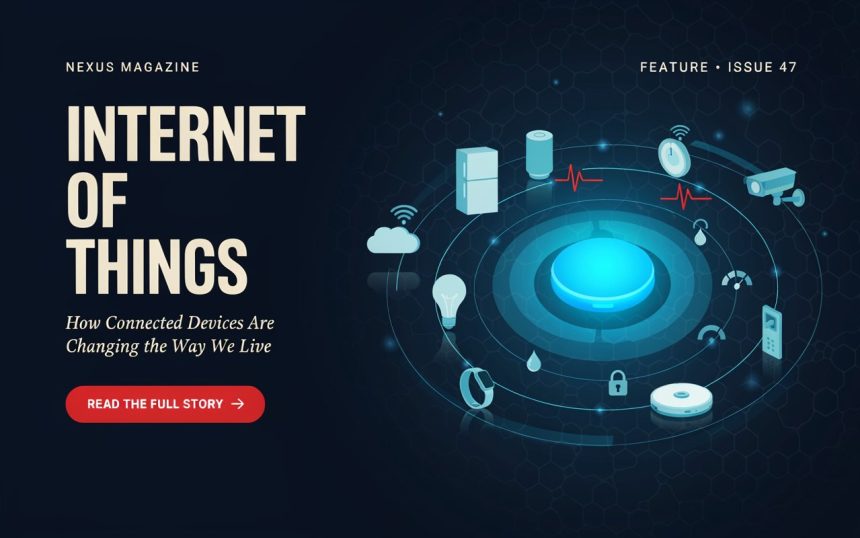
The way we use technology is changing faster than ever. Not long ago, a phone was mainly used for calls and messages. Today, phones can control lights, watches can track activity, cars can connect to the internet, and home appliances can make decisions based on information they receive.
This connected world is largely powered by the Internet of Things (IoT).
But what exactly does that mean? In simple terms, it describes everyday physical objects that can connect to a network, collect information, share data, and sometimes respond automatically. These objects can include smart speakers, security cameras, thermostats, vehicles, watches, refrigerators, factory equipment, and many other devices.
Think of IoT as giving ordinary objects a small digital brain and a way to communicate. A traditional light simply turns on or off when you use a switch. A connected light can be controlled from your phone, follow a schedule, or react to other devices.
That may sound futuristic, but connected technology is already part of everyday life. Let’s explore how it works, where it is being used, what benefits it offers, and what challenges we need to consider.
What Is the Internet of Things?
The Internet of Things refers to a network of physical devices that communicate with other devices or systems through internet or network connections.
These devices usually contain sensors, software, processors, and communication hardware. Sensors collect information from the environment, while software helps process that information and determine what should happen next.
For example, imagine a smart thermostat inside a house. It can monitor room temperature and send that information to an application. Depending on its settings, it might adjust heating or cooling automatically.
The same basic idea can be applied to thousands of products.
Common examples include:
- Smart watches
- Fitness trackers
- Connected televisions
- Smart speakers
- Security cameras
- Smart lighting
- Connected cars
- Home appliances
- Industrial machines
- Agricultural sensors
- Medical monitoring equipment
The important point is that IoT isn’t one specific product or technology. It is a broad ecosystem of connected objects.
In many cases, these devices work quietly in the background. You may not even realize how much connected technology you are using during a normal day.
How Does IoT Work?
Although connected systems can become technically complicated, the basic process is easier to understand.
A typical system has several important parts: a device, sensors, a network connection, a platform for processing information, and an application or service that lets people view or control the results.
1. Data collection
A sensor collects information. Depending on the device, this could include temperature, movement, location, light levels, pressure, speed, or other measurements.
2. Data transmission
The device sends the information through a communication network. Wi-Fi, Bluetooth, cellular networks, and other communication methods can be used.
3. Data processing
The information reaches software or a computing system where it can be analyzed. Sometimes processing happens directly on the device rather than somewhere else.
4. Decision or action
The system may produce useful information or trigger an action.
For instance, a connected security camera may detect movement and send an alert to a smartphone.
This process can happen within seconds.
A useful analogy is to imagine a large team of people working together. Sensors act like their eyes and ears, communication networks act like the telephone system, computing systems act like the brain, and applications provide a way for people to see what is happening and make decisions.
The Main Components Behind Connected Devices
IoT systems depend on several technologies working together.
Sensors and hardware
Sensors allow devices to observe their surroundings. A temperature sensor can measure heat, while a motion sensor can detect movement.
Connectivity
Devices need a way to communicate. Depending on the situation, this could involve Wi-Fi, Bluetooth, cellular connections, or specialized network technologies.
Data processing
Raw information isn’t always useful by itself. Computing systems organize and analyze it so that meaningful results can be produced.
Software
Applications provide the interface people use to monitor devices, change settings, receive notifications, and review information.
Cloud platforms
Many connected products use remote computing systems to store and process information.This makes it easy for users to access their data anytime, from virtually anywhere.
Security systems
Because connected devices can handle valuable information, protection is an important part of the overall design. Authentication, encryption, software updates, and access controls can help reduce risks.
These components don’t necessarily exist separately. Modern products often combine several of them into a single small device.
IoT in Everyday Life
You don’t need to work in a technology company to experience connected devices. They are increasingly common in ordinary homes.
A smart speaker can respond to voice commands. Connected lights can be controlled through an application. A smart doorbell can notify you when someone approaches your home.
Smart homes
Home automation is one of the most visible areas of connected technology. People can manage lighting, temperature, entertainment systems, locks, and security equipment from phones or automated schedules.
Imagine leaving home and having the lights switch off automatically while the thermostat changes to an energy-saving setting. When you return, the system could prepare the house according to your preferences.
Wearable technology
Smart watches and fitness devices collect information such as activity levels, exercise data, sleep patterns, and other measurements.
They can turn personal information into useful feedback and reminders.
Connected vehicles
Modern vehicles increasingly include internet-connected features. Navigation, emergency assistance, entertainment, remote controls, and vehicle diagnostics can all benefit from connectivity.
For many people, these features are becoming less of a luxury and more of an expected part of modern transportation.
IoT in Business and Industry
The impact goes far beyond homes.
Businesses can use connected equipment to monitor operations, identify problems, improve efficiency, and understand how resources are being used.
Factories, for example, may install sensors on machines to monitor performance. If equipment begins behaving differently from normal, software may identify a potential issue before the machine stops working.
This approach is often called predictive maintenance.
Instead of waiting for a machine to break, companies can use information to determine when maintenance may be necessary.
Supply chains
Connected tracking systems can provide information about shipments and inventory. Businesses can gain better visibility into where products are and how they are moving.
Retail
Stores can use connected systems to monitor inventory, understand customer behavior, and manage equipment.
Energy management
Businesses can monitor electricity consumption and identify areas where energy is being wasted.
Office buildings
Connected systems can automatically adjust lighting, heating, cooling, and security based on occupancy and schedules.
The result can be a more efficient workplace with less unnecessary resource consumption.
IoT in Healthcare
Healthcare is another important area where connected technology can make a difference.
Wearable and monitoring devices can collect information that helps healthcare professionals understand a patient’s condition. Some systems can send measurements remotely, reducing the need for patients to visit a medical facility for every routine check.
Remote monitoring
Connected devices may allow certain health measurements to be collected outside hospitals or clinics.
Medical equipment
Hospitals can use connected systems to track equipment, monitor machines, and manage resources.
Medication management
Some connected products can provide reminders or help monitor medication schedules.
Patient support
Technology can also help patients manage appointments, activity goals, and other aspects of their care.
However, healthcare applications require particularly strong privacy and security measures. Health-related information can be highly sensitive, so systems need appropriate safeguards.
IoT doesn’t replace doctors or other healthcare professionals. Instead, its role is often to provide additional information that can support better decisions and more convenient care.
IoT and Smart Cities
What happens when connected technology moves beyond individual homes and businesses?
It can help create what are often called smart cities.
A smart city uses connected systems and data to improve public services, infrastructure, transportation, energy use, and environmental management.
Traffic management
Sensors and connected systems can help monitor traffic conditions and provide information that supports better traffic management.
Smart parking
Connected parking systems can identify available spaces and make it easier for drivers to locate them.
Street lighting
Smart lighting systems can adjust operation according to schedules, movement, or environmental conditions.
Waste management
Connected sensors can provide information about waste containers, helping collection services plan routes more efficiently.
Environmental monitoring
Sensors can collect information about air quality, noise, temperature, water conditions, and other environmental factors.
The goal isn’t simply to put technology everywhere. The real objective is to use information intelligently to make cities safer, cleaner, more efficient, and easier to manage.
Benefits of the Internet of Things
Why are organizations and consumers investing so heavily in connected technology?
There are several reasons.
Greater convenience
People can control devices remotely and automate repetitive tasks.
Better efficiency
Businesses can use real-time information to reduce waste and improve operations.
Faster decision-making
Instead of relying only on assumptions, organizations can make decisions using current information.
Improved monitoring
Connected systems can continuously monitor equipment, environments, and processes.
Potential cost savings
Automation and better resource management can reduce unnecessary expenses.
Personalized experiences
Connected products can learn preferences and provide services based on individual needs.
Improved resource management
Energy, water, equipment, and other resources can be monitored more closely.
For example, an energy system that understands when a building is occupied may reduce unnecessary heating or cooling. Small improvements across thousands of devices can eventually create significant savings.
Security and Privacy Challenges
The convenience of connected technology comes with an important question: How safe is all this connectivity?
Every connected device can potentially become another point that needs protection.
Weak passwords, outdated software, poorly designed systems, and insecure connections can create opportunities for unauthorized access.
Privacy is another concern.
A connected device may collect information about where you go, how you use your home, your daily routines, or other personal activities. Even when the information seems harmless, large amounts of data can reveal surprisingly detailed patterns.
Good security practices include:
- Using strong, unique passwords
- Keeping device software updated
- Changing default login information
- Enabling multi-factor authentication when available
- Checking privacy settings
- Buying products from reputable manufacturers
- Disconnecting devices that are no longer needed
- Using secure home networks
Manufacturers also have an important responsibility. Security shouldn’t be treated as an optional feature added at the end of development. It should be considered from the beginning.
The more connected our world becomes, the more important digital safety will become.
The Role of Artificial Intelligence and IoT
Connected devices generate enormous amounts of information. But collecting data is only half the story.
Artificial intelligence can help systems understand patterns in that information.
For example, a factory may collect data from hundreds of machines. An intelligent system can analyze those measurements and identify unusual behavior.
In a home, an intelligent system might learn when residents normally use heating or lighting and adjust settings accordingly.
In transportation, data can help identify traffic patterns and improve route planning.
This combination of connected devices, data analysis, and intelligent software is becoming increasingly important.
However, artificial intelligence does not automatically make every connected product better. The quality of the results depends heavily on the quality of the information being collected, the design of the system, and how responsibly the technology is used.
The Future of IoT
Where is connected technology going next?
The answer is difficult to predict precisely, but several trends are already becoming clear.
More connected products
Connectivity will continue to appear in more types of equipment, vehicles, buildings, and public infrastructure.
Smarter automation
Systems will increasingly respond automatically instead of simply reporting information.
Edge computing
Some data processing will happen closer to the device itself. This can reduce delays and limit the amount of information that needs to travel to remote systems.
Better connectivity
Faster and more reliable networks can support increasingly sophisticated applications.
Greater focus on security
As connected technology becomes more important, stronger security practices will become essential.
More sustainable technology
Connected systems may help monitor energy use, reduce waste, and improve resource management.
The future is unlikely to be about one giant connected system controlling everything. Instead, we will probably see many different systems working together in homes, businesses, vehicles, hospitals, farms, and cities.
Is IoT Really Worth It?
For consumers, the answer depends on the product and the problem it solves.
A connected device isn’t automatically useful just because it has an internet connection.
Before buying one, ask yourself a few simple questions:
Does it solve a real problem?
If you rarely need remote control or automation, a basic product may be enough.
What information does it collect?
Read the privacy information and understand what data the product handles.
How secure is it?
Look for manufacturers that provide regular software updates and reasonable security features.
Will it work with your existing technology?
Compatibility can make a major difference when you have several connected products.
Is the cost justified?
Consider both the purchase price and any ongoing subscription or service costs.
The best connected technology isn’t necessarily the most expensive or feature-packed option. It’s the one that provides meaningful value without creating unnecessary complexity.
Conclusion
The Internet of Things is changing the relationship between people and technology. Everyday objects can now collect information, communicate with other systems, and perform tasks that once required direct human control.
From smart homes and wearable devices to healthcare, factories, transportation, agriculture, and cities, connected technology is becoming part of many areas of modern life.
Its benefits are clear: convenience, automation, efficiency, monitoring, and better access to information. At the same time, privacy, security, cost, and responsible data use cannot be ignored.
Ultimately, IoT is not really about putting an internet connection into as many objects as possible. It is about making technology more useful.
The future will likely bring even more connected devices, but the most successful solutions will be the ones that quietly solve real problems and make everyday life better.
Frequently Asked Questions
1. What is the Internet of Things?
The Internet of Things is a network of physical devices that can connect, collect information, exchange data, and sometimes perform actions automatically. Examples include smart watches, connected appliances, security cameras, vehicles, and industrial equipment.
2. How does IoT work?
IoT generally works by collecting information through sensors, sending that information through a network, processing the data, and then producing an action, notification, or useful result. Different systems may use different combinations of hardware, software, networks, and computing services.
3. What are some common examples of IoT?
Common examples include smart home devices, wearable technology, connected cars, security systems, smart appliances, industrial sensors, agricultural monitoring equipment, and connected healthcare devices.
4. Is IoT safe to use?
Connected technology can be safe when devices are properly designed, maintained, and secured. Users should choose reputable products, install updates, use strong passwords, and review privacy settings. Manufacturers also have an important role in protecting users and their information.
5. What will IoT look like in the future?
IoT will likely become more automated, intelligent, and integrated into everyday environments. Advances in artificial intelligence, networking, sensors, and computing may allow connected systems to respond faster and perform more useful tasks while requiring less direct interaction from people.

