
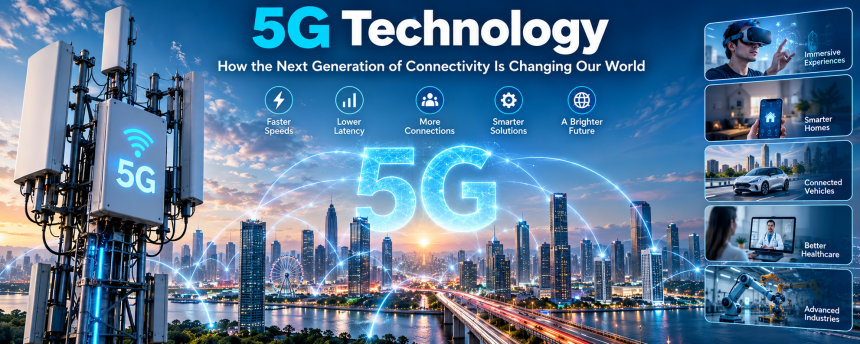
But what does this new generation of wireless communication really mean for ordinary people? Is it simply about downloading movies faster, or is there something much bigger happening behind the scenes?
The answer is much bigger. Modern wireless networks are designed to support faster communication, connect more devices, reduce delays, and create opportunities for technologies that were once considered futuristic. From smart homes and self-driving vehicles to remote healthcare and immersive entertainment, advanced mobile connectivity has the potential to influence many parts of daily life.
Think of older mobile networks as a busy two-lane road. As more cars enter the road, traffic becomes slower and more crowded. The latest generation of wireless infrastructure is more like a modern highway with multiple lanes, smarter traffic management, and faster routes. More devices can communicate at the same time without creating the same level of congestion.
This article explores how next-generation mobile connectivity works, why it matters, where it is being used, and what challenges still need to be addressed.
What Is 5G Technology?
5G is the fifth generation of mobile network technology, designed to deliver faster speeds, lower latency, and more reliable connectivity than previous generations. It was developed to improve wireless communication beyond the capabilities of previous generations such as 3G and 4G.
Each generation of mobile technology introduced major improvements:
- 1G made basic mobile voice calls possible.
- 2G introduced digital communication and text messaging.
- 3G made mobile internet more practical.
- 4G brought faster internet, better streaming, and improved mobile applications.
- 5G focuses on higher speeds, lower delays, greater capacity, and improved connectivity for a large number of devices.
While faster internet is one of its most noticeable benefits, the purpose of this technology goes far beyond smartphones.
Modern networks are being designed to support:
- Connected vehicles
- Smart cities
- Industrial automation
- Remote medical services
- Virtual and augmented experiences
- Internet-connected devices
- Advanced cloud applications
- High-quality video communication
In simple terms, this generation aims to create a more responsive and connected digital environment.
How Does 5G Work?
Understanding wireless communication does not require advanced technical knowledge. At its core, a mobile network sends information between devices using radio signals.
When you send a message, stream a video, or make a call, your device communicates with nearby network equipment. That information then travels through a larger network until it reaches its destination.
The newer generation improves this process through several important technologies.
Higher-Frequency Radio Waves
Some advanced networks use higher-frequency radio signals that can carry large amounts of information.
These signals can support faster communication and greater capacity. However, they may have shorter coverage ranges and can be affected by obstacles such as buildings.
Because of this, network providers may use a combination of different frequency ranges to balance coverage and performance.
Small Cells
Traditional mobile networks often depend heavily on large cell towers. Newer networks can also use smaller network stations placed closer to users.
These small cells help improve coverage and capacity, especially in crowded locations.
For example, busy places such as:
- Stadiums
- Airports
- Shopping centers
- City centers
may benefit from additional network equipment.
Massive MIMO
MIMO stands for Multiple Input Multiple Output.
This technology allows network equipment to communicate with multiple devices more efficiently.
Imagine a teacher speaking to an entire classroom. Instead of talking to one student at a time, the teacher can communicate with several groups at once. Similarly, advanced antennas can manage communication with many devices simultaneously.
This improves network efficiency and helps support growing numbers of connected devices.
Beamforming
Beamforming helps direct wireless signals more accurately toward devices.
Instead of broadcasting signals equally in every direction, the network can focus communication where it is needed.
This can improve efficiency and reduce unnecessary signal interference.
Together, these technologies help create faster, smarter, and more flexible wireless networks.
Faster Internet Speeds for Everyday Users
One of the most obvious advantages of modern mobile networks is improved speed.
Faster connectivity can make many everyday activities feel smoother.
For example, users may experience improvements when:
- Downloading large files
- Streaming high-quality videos
- Playing online games
- Making video calls
- Uploading photos and videos
- Using cloud-based applications
Imagine downloading a large movie file. On a slower connection, you may need to wait several minutes or even longer. With improved network performance, that waiting time can potentially become much shorter.
However, actual speeds depend on several factors.
These include:
- Your location
- Network coverage
- Device compatibility
- Signal strength
- Number of users connected
- Network provider infrastructure
This means not every user will experience the same performance.
A person using a modern smartphone near a strong network signal may receive significantly better speeds than someone using an older device in an area with limited infrastructure.
Still, faster connectivity remains one of the major reasons people are interested in next-generation mobile networks.
Lower Latency and Why It Matters
Speed is important, but another major feature of advanced wireless communication is low latency.
Latency refers to the delay between sending information and receiving a response.
For example, imagine pressing a button during an online game. If the network delay is high, the action may appear on screen slightly later. This delay can affect the experience.
Lower latency makes communication feel more immediate.
Why Low Delay Is Important
Reduced response times can improve many applications, including:
- Online gaming
- Video conferencing
- Remote robotics
- Smart vehicles
- Industrial automation
- Virtual reality
Consider remote surgery as an example.
In certain advanced healthcare environments, doctors may need to control specialized equipment from a distance. Even a small communication delay could affect precision.
Similarly, connected vehicles may need to exchange information quickly to improve safety systems.
Lower latency creates opportunities for technologies that depend on fast responses rather than simply fast downloads.
This is one of the biggest differences between modern network development and earlier mobile generations.
Supporting More Connected Devices
Our world is becoming increasingly connected.
Today, smartphones are only one part of the digital ecosystem. Many other devices can now connect to the internet.
These include:
- Smart watches
- Security cameras
- Smart televisions
- Home appliances
- Industrial sensors
- Fitness trackers
- Connected cars
As the number of devices grows, networks need to handle much larger amounts of communication.
Imagine a large concert venue with thousands of people. If everyone tries to connect to the internet at the same time, older infrastructure may struggle.
Advanced mobile networks are designed to support greater device density.
This capability is especially important for the Internet of Things, often called IoT.
The Internet of Things refers to physical devices that collect, send, and receive information through internet connections.
For example, a smart thermostat may monitor room temperature and automatically adjust heating or cooling.
A smart factory may use hundreds or thousands of sensors to monitor equipment.
A city may use connected sensors to manage traffic and public services.
The ability to support large numbers of connected devices could become increasingly important as digital technology continues to expand.
The Role of 5G in Smartphones
For most people, the first experience with next-generation connectivity comes through a smartphone.
Modern phones can use faster wireless connections to improve everyday activities.
Better Streaming
High-speed mobile connections can improve video streaming.
Users may be able to watch:
- High-definition movies
- Live sports
- Online videos
- Video calls
with fewer interruptions when strong coverage is available.
This is especially useful for people who rely on mobile data while traveling or working outside their homes.
Improved Mobile Gaming
Online gaming depends heavily on both speed and response time.
Lower network delay can help games feel more responsive.
Cloud gaming services may also benefit because the game can run on powerful remote servers while the video is streamed to the player’s device.
This means users may eventually access advanced games without needing extremely powerful hardware.
Better Cloud Services
Many applications now store information online rather than directly on a device.
Faster connectivity can make cloud-based tools feel more responsive.
Users can upload files, access documents, and synchronize information more efficiently.
The smartphone is becoming more than a communication device. It is increasingly acting as a gateway to a much larger digital ecosystem.
Smart Homes and Connected Living
Smart home technology is becoming more popular around the world.
A connected home may include:
- Smart lights
- Digital assistants
- Security systems
- Smart locks
- Connected appliances
- Energy monitoring systems
These devices communicate with each other and with online services.
Imagine arriving home after work. Your lighting system automatically adjusts, your security system recognizes that you have entered the house, and your thermostat prepares the room temperature before you arrive.
This type of connected environment depends on reliable communication.
Advanced wireless infrastructure can help support the growing number of devices used inside homes and communities.
Improved Home Security
Connected security cameras can transmit video to smartphones and cloud platforms.
Faster networks may improve the ability to monitor high-quality video remotely.
Homeowners can potentially receive alerts when unusual activity is detected.
Energy Management
Smart systems can monitor electricity usage and help households manage energy more efficiently.
For example, connected devices could automatically reduce unnecessary power consumption.
Over time, these technologies may help create smarter and more efficient living environments.
Smart Cities and Public Services
Cities are becoming more connected as governments and technology companies explore new ways to improve public services.
A smart city uses digital systems and connected devices to collect and analyze information.
Potential applications include:
- Smart traffic lights
- Connected public transportation
- Environmental monitoring
- Intelligent street lighting
- Public safety systems
- Smart parking
Traffic Management
Traffic congestion is a major problem in many cities.
Connected sensors and intelligent systems could monitor traffic conditions in real time.
Traffic lights may eventually adjust automatically based on road conditions.
For example, if one road becomes heavily congested, the system could change traffic signals to improve the flow of vehicles.
Public Transportation
Connected buses and trains can provide real-time information to passengers.
People may be able to check:
- Arrival times
- Traffic conditions
- Vehicle locations
- Service delays
before leaving home.
This can make public transportation more convenient and predictable.
Environmental Monitoring
Connected sensors can measure air quality, temperature, noise levels, and other environmental conditions.
City authorities can use this information to make better decisions.
Technology alone cannot solve every urban problem, but better connectivity can provide useful information that supports smarter planning.
Healthcare and Remote Medical Services
Healthcare is another area where advanced connectivity could create important opportunities.
Medical services increasingly depend on digital systems.
Doctors already use technologies such as:
- Video consultations
- Digital medical records
- Remote patient monitoring
- Wearable health devices
Improved networks can support faster communication between patients, healthcare professionals, and medical systems.
Remote Patient Monitoring
Wearable devices can collect information such as heart rate and physical activity.
In some situations, this information can be transmitted to healthcare professionals.
Doctors may monitor patients remotely and identify potential problems earlier.
Telemedicine
Video consultations allow patients to communicate with doctors without visiting a medical facility.
This can be particularly useful for people living in remote areas.
Reliable, high-quality connectivity can improve video communication and support more advanced remote healthcare services.
Connected Medical Equipment
Hospitals may increasingly use connected equipment to monitor patients and manage resources.
Faster communication can support the movement of information between medical systems.
Of course, healthcare technology must also address privacy, security, and reliability. Medical information is sensitive, so strong protection is essential.
Transportation and Connected Vehicles
Transportation is changing as vehicles become more intelligent.
Modern cars already use advanced technologies such as:
- GPS navigation
- Parking sensors
- Collision warnings
- Driver assistance systems
Future vehicles may communicate with other vehicles, roads, traffic systems, and cloud services.
Vehicle-to-Vehicle Communication
Imagine two vehicles sharing information about road conditions.
One car detects a hazard ahead and sends information to nearby vehicles.
Other drivers may receive warnings before they reach the dangerous area.
This type of communication could potentially improve road safety.
Connected Roads
Road infrastructure may also become smarter.
Traffic lights, road sensors, and transportation systems could communicate with connected vehicles.
For example, a vehicle may receive information about:
- Road construction
- Traffic congestion
- Weather conditions
- Accidents
This could help drivers make better decisions.
The Future of Autonomous Transportation
Self-driving technology depends on a combination of sensors, software, artificial intelligence, and communication systems.
Advanced networks may support the exchange of information between vehicles and external systems.
However, reliable autonomous transportation will require much more than fast mobile connectivity. Safety, regulations, software reliability, and infrastructure will all play important roles.
Entertainment, Virtual Reality, and Augmented Experiences
Entertainment is becoming increasingly digital and interactive.
High-speed wireless communication can support new types of experiences.
Virtual Reality
Virtual reality, often called VR, creates immersive digital environments.
Users may wear headsets to explore virtual spaces, play games, or participate in digital experiences.
Fast and responsive connections can help support cloud-based VR services.
Augmented Reality
Augmented reality, or AR, adds digital information to the real world.
For example, a smartphone camera may display information about objects or locations.
Future applications could include:
- Interactive education
- Virtual shopping
- Navigation
- Gaming
- Workplace training
Imagine walking through a city while your device provides digital directions directly through an AR interface.
The combination of fast connectivity, artificial intelligence, and immersive technology could change how people interact with digital information.
Live Events
Concerts and sporting events may also benefit from improved mobile connectivity.
Large numbers of people can create network congestion.
Advanced infrastructure can help support more users in crowded environments.
People may be able to share videos, stream content, and access digital services more easily.
Business, Industry, and the Digital Economy
Modern wireless networks are not only designed for consumers.
Businesses and industries can also benefit from faster and more reliable communication.
Smart Manufacturing
Factories increasingly use automation and connected equipment.
Machines can communicate with sensors and digital management systems.
For example, sensors may detect when a machine requires maintenance before it completely fails.
This approach is sometimes called predictive maintenance.
Instead of waiting for equipment to break, companies can identify potential problems earlier.
Remote Work
The rise of remote work has increased the importance of reliable internet access.
Workers often depend on:
- Video meetings
- Cloud storage
- Online collaboration tools
- Remote access systems
Improved connectivity can help make remote work more efficient, especially for employees who rely on mobile networks.
Small Businesses
Faster mobile communication can also benefit small businesses.
Store owners can use cloud-based payment systems, online tools, digital marketing platforms, and connected devices.
As digital services continue to grow, reliable connectivity becomes an important part of economic activity.
Challenges and Concerns Surrounding 5G Technology
Despite its potential benefits, the development of new wireless infrastructure also creates challenges.
Infrastructure Costs
Building modern networks requires significant investment.
Network providers may need to install:
- New towers
- Small cells
- Fiber connections
- Advanced equipment
Expanding coverage into rural and remote areas can be particularly expensive.
This creates a challenge because people in major cities may receive new services earlier than those living in less populated regions.
Device Compatibility
Not every smartphone can access newer mobile networks.
Users may need compatible devices to benefit from advanced services.
This can create additional costs for consumers.
Coverage Differences
Availability varies significantly between countries and regions.
Even within the same city, performance can differ depending on network infrastructure and signal conditions.
Privacy and Security
As more devices connect to digital networks, cybersecurity becomes increasingly important.
A larger connected ecosystem creates more opportunities for potential security problems.
Companies and governments need to invest in:
- Data protection
- Secure network infrastructure
- Software updates
- Cybersecurity systems
Users should also protect their personal devices by using strong passwords, updating software, and being cautious when sharing sensitive information.
The Digital Divide
One important concern is unequal access to technology.
If advanced services are available mainly in wealthy cities or developed countries, other communities may be left behind.
Improving digital access should remain an important goal as communication technology continues to evolve.
How 5G Could Shape the Future
The full impact of next-generation connectivity may not be visible immediately.
When earlier mobile technologies were introduced, few people could predict exactly how smartphones, social media, streaming services, and mobile applications would transform everyday life.
The same may happen with modern wireless infrastructure.
New technologies often create opportunities that are difficult to imagine during their early stages.
Future developments may include:
- More intelligent cities
- Advanced robotics
- Improved remote education
- Connected transportation
- Expanded cloud computing
- Immersive entertainment
- Smart agriculture
- More advanced healthcare systems
Smart Agriculture
Farmers can use connected sensors to monitor crops and soil conditions.
Technology may help track:
- Soil moisture
- Weather conditions
- Equipment performance
- Crop health
This information can help farmers make more informed decisions.
Remote Education
Fast connectivity can support online learning.
Students may access:
- Interactive lessons
- Virtual classrooms
- Digital laboratories
- Immersive educational experiences
This could expand access to educational resources, particularly when combined with affordable devices and reliable internet access.
Artificial Intelligence and Connectivity
Artificial intelligence is becoming part of many digital services.
Advanced networks can support the movement of large amounts of data between devices and cloud platforms.
The combination of AI, cloud computing, connected devices, and fast communication may create new services that become part of everyday life.
The future will not be shaped by one technology alone. Instead, several technologies will work together like instruments in an orchestra, each contributing to a larger digital transformation.
Conclusion
5G technology represents an important step in the evolution of wireless communication. While many people associate it mainly with faster smartphone internet, its potential reaches far beyond mobile downloads and streaming.
Improved speed, lower latency, and greater network capacity can support connected homes, smart cities, healthcare systems, transportation, industrial automation, and immersive digital experiences.
At the same time, challenges related to infrastructure, cost, privacy, security, and equal access must be addressed. Technology is most valuable when its benefits are available to more people and when it is developed responsibly.
As networks continue to improve, the digital world may become faster, more connected, and more intelligent. Whether we are using smartphones, driving connected vehicles, attending virtual events, or managing smart devices at home, advanced connectivity is likely to play an increasingly important role in the future.
The journey is still developing, and some of the most important innovations may be technologies we have not even imagined yet.
Frequently Asked Questions
1. What is 5G technology?
5G is the fifth generation of mobile network technology, designed to deliver faster speeds, lower latency, and more reliable connectivity than previous generations. It is designed to provide faster speeds, lower latency, greater capacity, and improved support for connected devices.
2. Is 5G faster than 4G?
Yes, advanced networks can provide significantly faster speeds than previous mobile generations. However, actual performance depends on coverage, location, network infrastructure, and the device being used.
3. Do I need a new phone to use 5G?
Yes, you generally need a compatible smartphone that supports the newer network standard. Older devices designed only for earlier generations may not be able to access it.
4. How can 5G help smart cities?
It can support connected systems such as smart traffic management, public transportation monitoring, environmental sensors, intelligent lighting, and other digital services.
5. What are the biggest challenges of 5G technology?
Major challenges include infrastructure costs, uneven coverage, device compatibility, cybersecurity concerns, privacy issues, and ensuring equal access across different communities.