
We live in a world where smartphones, smartwatches, wireless earbuds, and other portable devices have become part of everyday life. From the moment we wake up until we go to sleep, we depend on technology for communication, entertainment, work, navigation, and much more. But there is one common problem that almost everyone experiences: keeping devices charged.
Traditional charging cables have been reliable for years, but they can sometimes be inconvenient and frustrating to use.Cables become tangled, connectors wear out, and sometimes you simply cannot find the right cable when you need it.
This is where a wireless charger steps in, making everyday charging simpler and more convenientInstead of plugging a cable directly into your device, you can simply place a compatible phone or accessory on a charging pad or stand. It sounds simple because it is simple. However, there is much more to wireless charging than just placing a phone on a surface.
How does it work? Is it safe? Does it charge as quickly as a cable? Can every smartphone use it? And is it worth buying?
This comprehensive guide explores everything you need to know about wireless charging technology, its benefits, limitations, compatibility, safety, and how to choose the right option for your daily needs.
What Is a Wireless Charger?
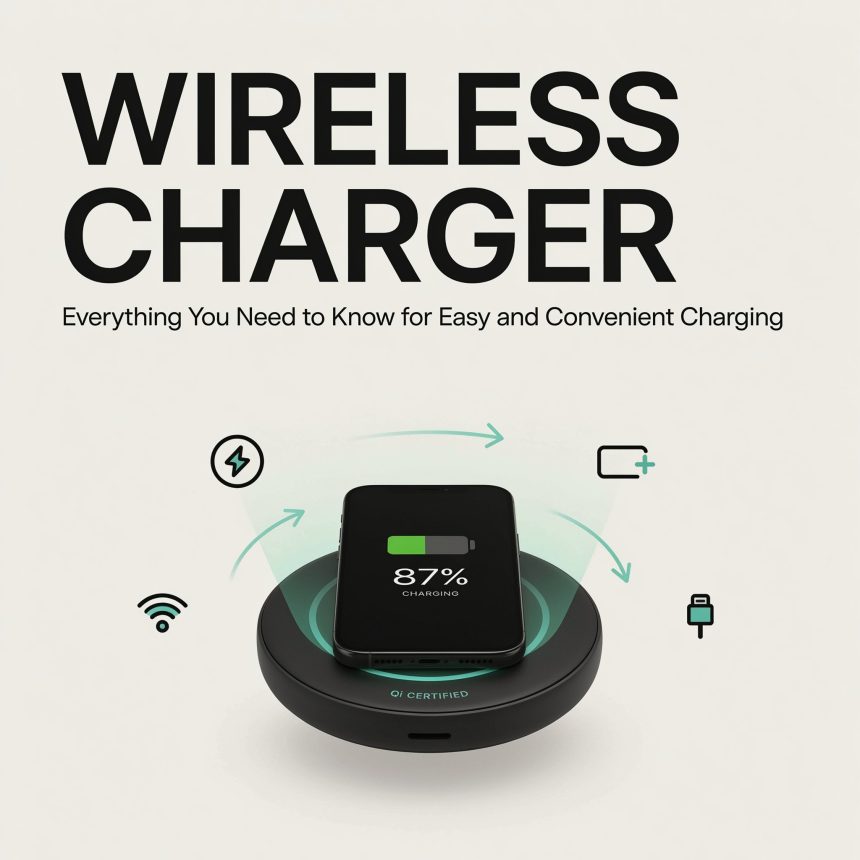
A wireless charger is a device that transfers electrical energy to another compatible device without requiring a charging cable to be plugged directly into that device.
Most modern systems use a process called inductive charging. The charging pad or stand creates an electromagnetic field that transfers energy to a compatible receiver inside your smartphone, earbuds, smartwatch, or another supported device.
In simple terms, imagine it like this: a wireless charging system is similar to an invisible bridge that carries energy from the charger to your device.
You place your phone on the charging surface, the charger recognizes the device, and electricity begins flowing without you connecting a cable to the phone’s charging port.
This convenience is the main reason wireless charging has become increasingly popular.
The Basic Components
A typical setup usually includes two important parts:
- The charging transmitter, which is inside the charging pad, stand, or dock.
- The charging receiver, which is built into a compatible device.
When the receiver is positioned correctly on the transmitter, energy can move between them.
Some chargers are built specifically for smartphones, while others can power multiple compatible devices simultaneously, making them ideal for a clutter-free setup.For example, one charging station may support a phone, smartwatch, and wireless earbuds.
How Does Wireless Charging Work?
Although wireless charging may feel almost magical at first, the technology behind it follows basic scientific principles.
Inside the charging pad is a coil of wire. When electricity flows through this coil, it creates a magnetic field. A compatible device also contains a receiving coil.
When the two coils are properly aligned, energy is transferred from the charger to the device.
The Importance of Alignment
Positioning matters.
Unlike a cable connection, where electricity travels through a physical connector, wireless charging depends on the transmitter and receiver being close enough and properly aligned.
If your phone is placed incorrectly, charging may not start or may stop unexpectedly.
This is why some charging products use:
- Magnetic alignment
- Raised surfaces
- Positioning guides
- Dedicated charging areas
- Built-in stands
These features help keep the device in the correct position.
Why the Charging Distance Is Usually Short
Most consumer wireless charging products require devices to remain very close to the charging surface.
You generally cannot place your phone across the room and expect it to charge. The device usually needs to rest directly on or extremely close to the charging pad.
This makes the technology more practical for desks, bedside tables, offices, and other everyday spaces.
Different Types of Wireless Charging Devices
Wireless charging technology comes in several forms. The right choice ultimately comes down to your devices, daily routine, and where you plan to use them.
Charging Pads
A charging pad is one of the simplest options.
You place your compatible smartphone or accessory flat on the surface, and charging begins when the device is properly positioned.
Charging pads are useful because they are:
- Easy to use
- Compact
- Convenient for bedside tables
- Suitable for desks
- Often portable
However, you usually need to place the device flat on the pad, which may make it less convenient if you want to use your phone while it charges.
Charging Stands
A charging stand holds your smartphone upright.
This can be especially useful on a desk because you can see notifications, check the time, or watch videos while the device receives power.
A stand can position the phone vertically or horizontally, depending on the design.
For many people, this creates a more comfortable experience than a flat charging pad.
Multi-Device Charging Stations
Multi-device stations are designed for people who own several compatible products.
A single charging station may support:
- A smartphone
- Wireless earbuds
- A smartwatch
Rather than dealing with multiple cables and power adapters, you can keep all your compatible devices neatly organized and charged in one convenient place.
These charging stations can make a desk or bedside table look cleaner and less cluttered.
Portable Wireless Charging Accessories
Some wireless chargers are designed with portability in mind, making them easy to carry and convenient for charging on the go.
These options can include compact charging pads, magnetic power banks, and foldable charging stations that are easy to pack and carry.
They’re especially useful for frequent travelers or anyone looking for a convenient backup power option when they’re away from home.
The Benefits of Using Wireless Charging
The growing popularity of wireless charging is driven by more than just technological innovation—it’s also about making everyday charging simpler and more convenient.It is mainly about convenience.
For many people, the ability to place a phone on a charging surface instead of searching for and connecting a cable can make everyday routines easier.
Less Cable Clutter
One of the biggest advantages is reducing cable clutter.
Take a moment to look around your home or office—how many charging cables are scattered across your desk, bedside table, or drawers? There may be separate cables for phones, earbuds, tablets, watches, and other devices.
A charging pad can help simplify your setup.
Instead of repeatedly connecting and disconnecting a cable, you simply place your compatible device on the charging surface.
Convenience Throughout the Day
Wireless charging can be especially useful for short charging sessions.
For example, you may place your phone on a charging stand while working at your desk. You might place it on a pad before going to sleep.
You do not need to think about connecting the cable every time.
The process becomes part of your daily routine.
Reduced Wear on the Charging Port
Repeatedly inserting and removing a charging cable can eventually contribute to physical wear on a device’s charging port.
Wireless charging allows you to charge without constantly using that port.
This does not mean a charging port will never experience problems, but reducing physical connections can be beneficial over time.
A Cleaner and More Organized Space
A charging station can help create a cleaner environment.
This is particularly helpful on:
- Office desks
- Nightstands
- Kitchen counters
- Workspaces
- Reception areas
Technology is often most useful when it quietly fits into your life, and wireless charging can do exactly that.
Is Wireless Charging Faster Than Cable Charging?
This is one of the most common questions.
The answer depends on the specific device and charger.
In many situations, wired charging can still be faster, especially when using high-speed charging technology designed for a specific smartphone.
Wireless charging has improved significantly over time, but charging speed can vary based on several factors.
Factors That Affect Charging Speed
The speed may depend on:
- The phone model
- The charging standard
- The power output of the charger
- The power adapter
- Device alignment
- Phone temperature
- The thickness of the phone case
- Background activity on the device
A phone may charge more slowly if it becomes too warm or if the charging coils are not properly aligned.
Convenience Versus Maximum Speed
The best choice depends on your needs.
If your battery is nearly empty and you need power as quickly as possible, a fast cable may be the better option.
However, if you are working at a desk for several hours or sleeping overnight, maximum charging speed may not matter as much.
Wireless charging is often about effortless convenience rather than winning a speed competition.
It is similar to choosing between taking a direct elevator and walking up a comfortable staircase. One may be faster, but the other may fit naturally into your routine.
Wireless Charging Compatibility
Not every device supports wireless charging.
Before buying a charging pad or station, you should check whether your smartphone or accessory includes wireless charging support.
Many modern devices are compatible with widely used wireless charging standards.
Smartphones
Many premium and mid-range smartphones now include built-in wireless charging support.
However, compatibility depends on the specific model.
Some budget devices may not include this feature.
Before purchasing a charger, check the specifications of your smartphone.
Wireless Earbuds
Many wireless earbud cases now support charging through compatible charging surfaces.
This can be particularly convenient because you can place the earbud case on a charging pad without connecting a cable.
Smartwatches
Some smartwatches use their own charging systems.
A charging station designed for multiple devices may include a dedicated area specifically for a compatible watch.
However, smartwatch compatibility can vary, so it is important to check before purchasing a multi-device station.
Phone Cases
A phone case can affect wireless charging performance.
Thin cases often allow charging to work normally. However, thick cases, metal components, or certain accessories may interfere with energy transfer.
If your phone does not charge properly while using a case, try removing the case to test whether it is causing the problem.
Understanding Charging Standards
When shopping for a wireless charging product, you may see references to different standards and technologies.
You do not need to become a technical expert to understand the basics.
A charging standard helps ensure that compatible devices and charging accessories can work together.
Why Standards Matter
Imagine if every smartphone company created completely different charging technology that could not work with other products.
Consumers would need a separate charger for every device.
Shared standards help improve compatibility and make the technology easier to use.
Before purchasing a charger, check:
- Whether it supports your device
- Whether it provides the correct power level
- Whether the charging system is officially compatible
Choosing a recognized and reliable charging product can help provide a better experience.
Magnetic Charging Systems
Some newer devices use magnetic alignment to help position the phone correctly.
Magnets can guide the phone into the ideal charging position.
This reduces the problem of placing a device slightly off-center.
Magnetic alignment can also make charging accessories easier to attach and remove.
For many users, this creates a more reliable and convenient experience.
Is Wireless Charging Safe?
Generally, properly designed and certified wireless charging products are intended for everyday use.
Modern devices and charging systems include safety features designed to manage power and temperature.
However, as with any electrical product, it is important to use reliable equipment correctly.
Temperature Management
Wireless charging can produce heat.
This is normal to some extent because energy transfer is not perfectly efficient.
Many modern charging systems monitor temperature and can adjust charging behavior when necessary.
If a phone becomes unusually hot, charging may slow down or pause temporarily.
Foreign Object Detection
Some wireless chargers include safety features that detect objects that should not be charged.
This can help reduce the risk of unnecessary heating.
However, it is still a good idea to keep coins, keys, and other metal objects away from the charging surface.
Using Quality Accessories
Cheap or poorly manufactured accessories may not provide the same level of safety or performance as reputable products.
Whenever possible, choose charging equipment from trusted manufacturers and check compatibility with your device.
Saving a small amount of money is not always worth risking poor performance or potential damage.
Does Wireless Charging Damage Battery Health?
Many people worry that wireless charging will damage their smartphone battery.
The reality is more complicated than a simple yes or no.
All rechargeable batteries naturally lose capacity over time.
Battery health can be influenced by many factors, including:
- Heat
- Charging habits
- Battery age
- High temperatures
- Heavy usage
- Frequent full charging cycles
Wireless charging itself is not automatically harmful, but excessive heat can contribute to battery aging.
How to Protect Your Battery
You can follow some simple habits:
- Avoid exposing your phone to extreme heat.
- Remove thick cases if they cause excessive warmth.
- Use a reliable charger.
- Keep the charging surface clean.
- Avoid placing the phone in direct sunlight while charging.
- Use the recommended accessories for your device.
Modern smartphones also include battery management systems that help control charging.
The key idea is simple: battery care is about overall habits, not just whether you use a cable or a charging pad.
Choosing the Right Wireless Charger
With so many products available, choosing the right charger can feel confusing.
The best option is the one that matches your devices and daily habits.
Check Device Compatibility
This should be your first step.
Make sure the charger supports your:
- Smartphone
- Earbuds
- Smartwatch
- Other accessories
Do not assume that every wireless charger works with every device.
Consider the Charging Speed
If charging speed is important to you, check the power output supported by both the charger and your phone.
Buying a powerful charger does not necessarily mean your phone will charge at that maximum speed.
The device itself must also support the relevant charging level.
Think About Where You Will Use It
Ask yourself a simple question: Where will I actually use this charger?
For example:
- A flat pad may work well beside your bed.
- A stand may be better for an office desk.
- A multi-device station may suit a technology-heavy household.
- A portable option may be useful for travel.
Choosing based on your lifestyle is often more important than choosing based only on appearance.
Look at Build Quality
A charger is something you may use every day.
Look for:
- A stable design
- Good-quality materials
- Reliable power management
- A non-slip surface
- Proper heat control
A well-designed charger can provide a better long-term experience.
Common Problems With Wireless Charging
Although wireless charging is convenient, it is not always perfect.
Sometimes a phone may fail to charge or charge more slowly than expected.
Fortunately, many problems are easy to identify.
The Device Is Not Properly Aligned
This is one of the most common issues.
Try repositioning the phone on the charging surface.
Move it slowly until charging begins.
Magnetic charging systems can help reduce alignment problems.
The Phone Case Is Blocking Charging
A thick case or a case containing metal components may interfere with charging.
Remove the case and test the device again.
If charging works without the case, you may need a more compatible case.
The Charger Is Not Receiving Enough Power
Some wireless chargers require a suitable power adapter to provide their maximum performance.
If the charger is connected to a weak adapter, charging may be slower.
Always check the recommended power requirements.
The Device Is Too Hot
High temperatures can cause a phone to reduce charging speed.
Move the device away from heat sources and allow it to cool.
If possible, avoid using demanding applications while charging.
Wireless Charging for Everyday Life
The real value of wireless charging is often discovered through daily use.
It may seem like a small convenience at first.
But small conveniences can add up.
At Your Bedside
A charging pad on a bedside table can make nighttime charging easier.
You can simply place your phone down before sleeping.
There is no need to search for a cable in the dark.
At Your Work Desk
A charging stand can keep your phone visible during the day.
You can check notifications while keeping the battery topped up.
This is useful for people who spend long hours working at a computer.
In Shared Spaces
A charging station can also be useful in homes and offices where multiple people use compatible devices.
Instead of searching for different cables, devices can be placed on shared charging surfaces.
While Traveling
Portable charging accessories can reduce the number of cables you need to carry.
However, remember that some wireless chargers still require a power source, so they are not always a replacement for a power bank.
The right travel solution depends on how and where you travel.
Wireless Charging and the Future of Technology
Wireless charging technology continues to develop.
The future may bring faster speeds, improved efficiency, better alignment, and support for more types of devices.
We are already seeing charging technology become more integrated into everyday products.
More Devices May Become Compatible
As technology evolves, more products may support cable-free power.
Future devices could include:
- Smartphones
- Wearable technology
- Earbuds
- Tablets
- Home accessories
- Electric transportation systems
The idea of reducing physical connections could become increasingly important.
Improved Efficiency
One of the biggest goals for future charging systems is improving efficiency.
More efficient energy transfer could reduce wasted energy and unnecessary heat.
This would make charging more practical and environmentally friendly.
Better Convenience
Future charging surfaces may become more intelligent.
Imagine desks, furniture, or public spaces with built-in charging capabilities.
Instead of thinking about charging as a separate task, it could become something that happens naturally while you work, relax, or travel.
Technology often moves in the direction of reducing friction.
Wireless charging represents exactly that idea.
It tries to remove one small obstacle from your day.
Wireless Charging Myths You Should Ignore
As with many technologies, wireless charging has developed several myths.
Understanding the truth can help you make better decisions.
Myth: Wireless Charging Works From Anywhere
False.
Most consumer systems require close contact or very short distances between the charger and the device.
You cannot usually charge your phone from across a room.
Myth: It Always Charges Slowly
Not necessarily.
Charging speed depends on the charger, device, power source, temperature, and compatibility.
Some modern systems can provide impressive charging performance.
Myth: Every Phone Can Charge Wirelessly
False.
Only devices with compatible wireless charging hardware can use this technology without additional accessories.
Myth: Wireless Charging Is Dangerous
Properly designed and compatible charging products include safety features for normal everyday use.
However, consumers should still choose reliable products and follow manufacturer instructions.
Myth: You Never Need a Cable Again
Wireless charging is convenient, but cables are still useful.
A cable may be faster in some situations, especially when you need to charge quickly.
The best approach may be to use both technologies depending on the situation.
Tips for Getting the Best Wireless Charging Experience
If you already own a compatible charger or plan to buy one, a few simple habits can improve your experience.
Keep the Charging Surface Clean
Dust and debris can affect how securely the phone rests on the charger.
Cleaning the surface occasionally can help.
Position the Device Correctly
Make sure the device is centered or aligned according to the charger’s design.
If charging does not begin, reposition the device.
Use Compatible Accessories
Choose products that are designed to work with your phone and other devices.
Compatibility is more important than simply choosing the cheapest option.
Avoid Excessive Heat
Keep your device away from direct sunlight and other heat sources while charging.
If the phone becomes unusually warm, allow it to cool.
Choose the Right Location
Place your charger somewhere you naturally spend time.
A charger hidden in a drawer will not provide much convenience.
A charger on your desk or bedside table is more likely to become part of your routine.
Conclusion
Wireless charging has changed the way many people think about keeping their devices powered. Instead of dealing with cables every time a battery needs attention, you can simply place a compatible device on a charging surface and let the technology do the rest.
It may not completely replace traditional cables, and it may not always offer the fastest possible charging speed. However, its greatest strength is convenience. A charging pad, stand, or multi-device station can make everyday technology feel simpler and more organized.
The best wireless charger is not necessarily the most expensive or the most powerful. It is the one that works reliably with your devices and fits naturally into your daily routine.
As charging technology continues to improve, wireless power will likely become even more common. For now, it offers a practical solution for anyone who wants fewer cables, a cleaner workspace, and an easier way to keep essential devices ready for the day ahead.
Frequently Asked Questions
1. Can any phone use a wireless charger?
No. A smartphone must have compatible wireless charging technology built into it or use a supported external accessory. Always check your phone’s specifications before purchasing a charging pad.
2. Is wireless charging slower than wired charging?
In many cases, wired charging can be faster, especially when using high-speed charging technology. However, wireless charging is convenient and can be more than sufficient for overnight or everyday charging.
3. Can I use my phone while it is charging wirelessly?
Yes, especially when using a charging stand. However, moving the phone away from the charging area may interrupt charging unless the system uses secure magnetic alignment.
4. Does a phone case affect wireless charging?
Some cases work perfectly, while thick cases or cases containing metal components may interfere with charging. If charging problems occur, try removing the case.
5. Is it safe to leave a phone on a wireless charger overnight?
Modern smartphones and reliable charging systems include power and battery management features designed for normal charging use. However, using quality equipment and avoiding excessive heat is always recommended