
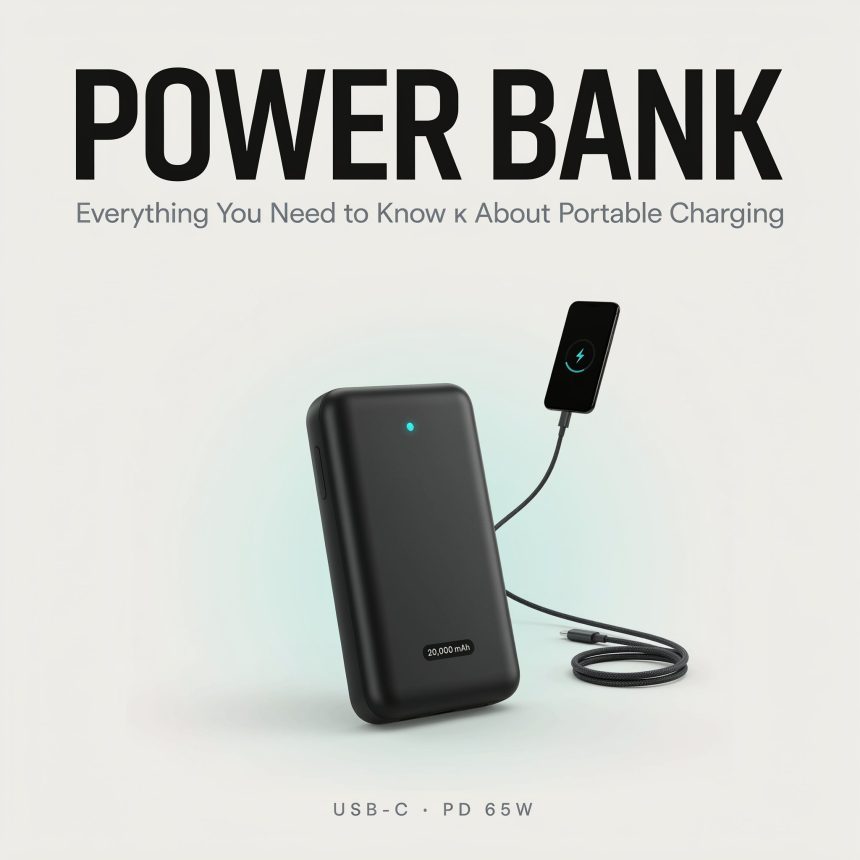
Have you ever been outside, traveling, working, or simply enjoying your day when your phone suddenly shows a low battery warning? It is a familiar problem in a world where smartphones have become essential for communication, navigation, entertainment, work, and everyday tasks. A portable charger can provide a simple solution by giving your devices extra energy when a wall outlet is not available.
A power bank is one of the most useful accessories for modern digital life. It stores electrical energy and allows you to charge compatible devices wherever you go. Whether you are traveling, attending school, working remotely, spending time outdoors, or preparing for an emergency, a portable battery pack can help keep your important devices running.
However, choosing and using one is not always as simple as picking the largest battery. Capacity, charging speed, ports, safety features, size, compatibility, and battery quality can all affect your experience.
This guide explains everything you need to know about portable charging, from how these devices work to how to choose the right model for your daily needs.
What Is a Power Bank and How Does It Work?
A power bank is a portable battery designed to store electrical energy and transfer it to another device.
Most people use these devices to charge smartphones, but they can also support tablets, wireless earbuds, smartwatches, cameras, portable gaming devices, and, in some cases, laptops.
The basic process is simple.
First, you charge the portable battery using a wall charger, computer, or another compatible power source. Once the internal battery stores enough energy, you can take it with you and use it later.
When your phone or another device needs charging, you connect it to the portable battery using a cable or a wireless charging feature if supported.
You can think of it like a water tank. A water tank stores water until you need it. In a similar way, a portable charger stores electrical energy until your phone, tablet, or other device needs additional power.
Of course, some energy is lost during the charging process. This means that a battery pack with a certain advertised capacity will not always deliver exactly that same amount of usable energy to your phone.
The internal technology, charging efficiency, temperature, and device compatibility can all affect actual performance.
Why Portable Charging Has Become So Important
Modern life depends heavily on electronic devices.
Your smartphone may be your:
- Communication tool
- Camera
- Navigation system
- Entertainment device
- Payment method
- Work assistant
- Emergency contact tool
When the battery runs out, many of these important functions become unavailable.
This is why portable charging has become so popular.
Imagine traveling to an unfamiliar city. Your phone battery is almost empty, and you need a map to find your hotel. Or perhaps you are waiting at an airport and need to contact someone about a delayed flight. A fully charged backup battery can make these situations much easier.
Portable chargers are also useful for people who spend long periods away from traditional power outlets.
They can be especially helpful for:
- Travelers
- Students
- Remote workers
- Drivers
- Outdoor enthusiasts
- Content creators
- Business professionals
- Emergency preparedness
Instead of searching for a public charging station, you can carry your own source of backup energy.
For many people, that convenience alone makes a portable battery pack a valuable everyday accessory.
Understanding Battery Capacity and mAh
One of the first things people notice when buying a portable charger is the capacity rating.
Capacity is often measured in mAh, which stands for milliampere-hours.
You do not need to understand every technical detail to use this information effectively. In simple terms, a larger number usually means the battery can store more energy.
Common capacity options include:
- 5,000 mAh
- 10,000 mAh
- 20,000 mAh
- 30,000 mAh and above
A smaller model may be easy to carry in a pocket or small bag. A larger model may provide more charging sessions but will usually be heavier and larger.
However, capacity numbers should not be viewed as an exact promise of how many times your phone will recharge.
Why?
Because charging involves energy conversion. Some power is lost as energy moves from the portable battery to your device. Heat and electronic processes can also reduce efficiency.
Your smartphone’s own battery capacity matters as well.
A 10,000 mAh portable charger may charge one phone several times, while a device with a larger battery may receive fewer full charges.
The best approach is to think about your personal needs.
Do you need a small backup battery for emergencies?
Or do you need enough power to support multiple devices during a long trip?
Your answer can help determine the right capacity.
Choosing the Right Capacity for Your Needs
There is no single perfect battery size for everyone.
The right option depends on how you plan to use it.
For everyday use
A smaller capacity model can be convenient if you simply need extra power during the day. These options are usually lightweight and easy to carry.
They can be useful for commuting, school, short trips, and unexpected battery emergencies.
For regular travelers
A medium or high-capacity model may be more practical. Travel often involves long periods away from reliable charging outlets.
A larger battery can provide more flexibility during flights, road trips, and long days of sightseeing.
For multiple devices
If you carry a smartphone, tablet, wireless earbuds, and other electronics, you may need more stored energy.
A larger capacity can also be useful when sharing power with family members or friends.
For outdoor activities
Camping, hiking, and other outdoor activities may require a high-capacity option because access to electricity can be limited.
Some models are designed for rugged environments and may include additional features for outdoor use.
The goal is not always to buy the biggest battery available.
A huge model may provide more energy, but it can also take up more space and add unnecessary weight.
The best option is the one that matches your daily habits.
Charging Speed and Why It Matters
Capacity is important, but charging speed is also a major factor.
A large battery pack may store plenty of energy, but it can still be frustrating if it charges your phone very slowly.
Modern portable chargers may support different charging technologies that allow compatible devices to recharge more quickly.
You may see terms such as:
- Fast charging
- Quick charging
- USB-C charging
- Power delivery
- High-speed charging
The names and technical standards can vary, but the main idea is simple: some systems can transfer energy faster than basic charging methods.
However, faster charging depends on more than the portable battery itself.
Your phone or other device must also support the charging standard. The cable may matter as well.
For example, using a high-speed portable charger with an old or incompatible cable may prevent you from receiving the best possible charging performance.
Before buying, check the specifications of your smartphone, tablet, or laptop.
Look for information about:
Supported charging speed
Different devices can accept different levels of power.
Charging port
Some devices use USB-C, while older products may use other types of connections.
Cable compatibility
Not every cable supports the same charging performance.
Understanding these details can help you avoid buying a product that does not match your devices.
USB-C, USB Ports, and Device Compatibility
Modern portable charging has become more flexible because many devices now use USB-C connections.
USB-C is popular because the same type of connection can support different devices, including smartphones, tablets, laptops, and accessories.
However, many portable chargers include more than one type of port.
You may find:
- USB-C ports
- USB-A ports
- Built-in cables
- Wireless charging surfaces
A device with multiple output ports can be useful if you need to charge more than one device at the same time.
For example, you might charge your smartphone through USB-C while another person charges their wireless earbuds using a second port.
Compatibility is extremely important.
Before purchasing, consider the devices you currently own.
Ask yourself:
- What charging ports do my devices use?
- Do I need to charge more than one device at once?
- Do I need fast charging?
- Do I want wireless charging?
- Will I need laptop charging support?
Planning ahead can save you money and prevent frustration.
Technology changes quickly, so choosing a portable battery with modern connections may also help it remain useful for a longer period.
Wireless Charging and Modern Convenience
Wireless charging has added another level of convenience to portable battery technology.
Instead of connecting a cable directly to your phone, you can place a compatible device on a wireless charging surface.
This can be especially convenient when you are carrying fewer cables.
Some portable batteries are designed with magnetic or wireless charging systems that help keep compatible smartphones connected while charging.
The biggest advantage is convenience.
You simply place the device in the correct position and allow the energy transfer to begin.
However, wireless charging may not always be as efficient or as fast as a high-quality wired connection.
The phone and charging surface must also remain properly aligned.
If the device moves too much, charging may stop or become less effective.
Wireless charging can be a great feature for people who value simplicity, but a traditional cable is still useful for many situations.
For this reason, some users prefer a portable battery that offers both wired and wireless options.
That combination provides more flexibility when traveling or using different devices.
Can a Power Bank Charge More Than a Smartphone?
Absolutely.
Portable batteries are now designed for many types of electronics.
Depending on the model and power output, they may charge:
- Smartphones
- Tablets
- Wireless earbuds
- Smartwatches
- Cameras
- Portable gaming devices
- Bluetooth speakers
- Small accessories
- Some laptops
The key factor is whether the portable charger can provide enough power for the device.
A small battery pack may be perfect for a smartphone but may not have enough output to charge a laptop effectively.
Laptops generally require more energy and may need a USB-C charging system with higher power delivery support.
If you plan to charge a larger device, carefully check the manufacturer’s charging requirements before buying.
Do not assume that every USB-C portable battery can charge every USB-C laptop.
The connection may physically fit, but the power output may still be too low.
For people who travel for work, a high-capacity model capable of supporting larger devices can be extremely useful.
Instead of carrying multiple chargers, you may be able to use one portable energy source for several compatible products.
Safety Features You Should Look For
Safety should always be a priority when dealing with batteries and electronic devices.
A good portable charger should include protective features designed to reduce common electrical risks.
Important safety protections may include:
Overcharge protection
This helps prevent a device from receiving unnecessary charging once the battery is full.
Overheating protection
Batteries can generate heat during charging. Temperature protection can help reduce potential risks.
Short-circuit protection
This can help protect the charger and connected devices if an electrical problem occurs.
Overcurrent protection
This helps control electrical flow and may prevent excessive current.
Overvoltage protection
This feature helps protect devices from receiving unsafe levels of voltage.
While these protections are important, users also have responsibilities.
Avoid exposing portable batteries to extreme heat.
Do not use a visibly damaged battery pack.
Do not use damaged or unsafe cables.
It is also wise to buy products from reputable manufacturers rather than choosing an unknown product based only on a low price.
A battery may look like a simple accessory, but it stores significant electrical energy. Treating it responsibly is important.
How to Use and Maintain Your Portable Battery
Taking care of your portable charger can help improve its long-term performance.
One useful habit is to avoid leaving it in extremely hot or cold environments for long periods.
For example, leaving a battery inside a very hot car can reduce performance and potentially create safety concerns.
It is also important to use reliable charging equipment.
Poor-quality cables and chargers can affect charging performance and may create unnecessary risks.
Here are some simple maintenance tips:
- Keep the device clean and dry.
- Avoid extreme temperatures.
- Use compatible cables and chargers.
- Inspect the battery for visible damage.
- Store it safely when not in use.
- Follow the manufacturer’s instructions.
You should also recharge the portable battery when necessary.
Leaving any rechargeable battery unused for extremely long periods without checking its charge level may affect performance.
If you notice swelling, unusual heat, physical damage, or strange smells, stop using the device and follow proper disposal or safety guidance.
A portable charger is designed to make life easier, but responsible use is essential.
Power Banks for Travel and Outdoor Adventures
Travel is one of the most common reasons people buy portable chargers.
Airports, trains, hotels, buses, and other travel locations may offer charging stations, but access is not always guaranteed.
A backup battery gives you more independence.
You can charge your phone while:
- Waiting for a flight
- Traveling by train
- Taking a road trip
- Exploring a new city
- Attending an event
- Hiking outdoors
For frequent travelers, capacity and portability are important considerations.
A very large battery may provide plenty of energy but could be inconvenient to carry throughout the day.
A smaller model may be easier to transport but may not provide enough power for long journeys.
Air travel can also involve rules regarding portable batteries.
Because rechargeable lithium batteries are regulated for safety reasons, travelers should check current airline and airport regulations before flying with a high-capacity battery pack.
Different airlines and countries may have specific requirements.
Outdoor users may also benefit from additional features such as:
- Durable construction
- Water resistance
- Dust protection
- Built-in lights
- Multiple charging ports
The ideal travel battery depends on where you are going and how long you expect to be away from electricity.
The Environmental Impact of Portable Batteries
Portable electronics make life more convenient, but they also raise environmental concerns.
Rechargeable batteries require materials and resources to produce. When electronic products are thrown away improperly, they can contribute to pollution and waste.
This is why responsible disposal is important.
Old or damaged portable batteries should not simply be thrown into regular household trash if local recycling programs offer appropriate battery disposal options.
Recycling helps recover certain materials and can reduce unnecessary environmental damage.
Consumers can also make more sustainable choices by purchasing durable products.
Buying a cheap battery that fails quickly may lead to more electronic waste.
A higher-quality product that lasts longer may be a better long-term choice.
Using technology responsibly is similar to taking care of other resources in life.
Convenience is valuable, but so is thinking about what happens after a product reaches the end of its useful life.
As battery technology continues to improve, manufacturers may develop more efficient and environmentally responsible solutions.
Until then, users can make a difference by using products carefully and disposing of them properly.
Common Problems and How to Avoid Them
Even good portable chargers can sometimes experience problems.
One common issue is slow charging.
This can happen because of:
- A low-quality cable
- An incompatible charging standard
- A weak power source
- An older device
- High device usage during charging
Another common problem is a battery that seems to lose capacity over time.
Rechargeable batteries naturally experience wear as they are used and recharged repeatedly.
This is normal, although high-quality products may maintain useful performance for longer.
Overheating can also be a concern.
Some warmth during charging may be normal, but excessive heat should not be ignored.
Stop using the device if it becomes unusually hot or shows signs of damage.
A portable battery may also fail to charge another device because of compatibility issues.
Always check the cable, port, charging settings, and device requirements.
Sometimes the problem is not the battery itself. A damaged cable or dirty charging port may be responsible.
Simple troubleshooting can often solve the issue.
How to Choose the Best Power Bank
Choosing the best portable charger depends on your needs rather than simply selecting the most expensive model.
Start with capacity.
Think about how often you need backup charging and how many devices you carry.
Next, consider charging speed.
If your smartphone supports fast charging, choose a compatible model that can take advantage of that feature.
Then look at the ports.
A combination of modern and widely compatible connections can provide more flexibility.
Also consider size and weight.
A compact model may be easier to carry every day, while a larger model may be better for travel or extended use.
Safety features should also be a priority.
Look for reliable products from reputable brands and avoid options with questionable quality.
Finally, think about your future needs.
If you plan to buy a tablet, laptop, or new smartphone, a more versatile model may provide better value.
The best portable battery is not necessarily the biggest one.
It is the one that fits naturally into your lifestyle.
The Future of Portable Charging
Battery technology continues to develop.
In the future, portable charging may become faster, smaller, more efficient, and more environmentally friendly.
We may see improvements in:
- Charging speed
- Battery capacity
- Energy efficiency
- Wireless charging
- Device compatibility
- Safety systems
- Sustainable materials
Some users already expect their portable batteries to charge multiple devices at the same time.
Future products may become even more intelligent, automatically adjusting power delivery based on the connected device.
Wireless technology may also continue to improve.
Imagine carrying fewer cables while still being able to charge multiple devices quickly and safely.
Portable energy solutions could also become more important as people depend on electronic devices for work, transportation, communication, and security.
The future of charging is not simply about putting more energy into a battery.
It is about making energy more accessible, convenient, efficient, and reliable.
Conclusion
A power bank has become one of the most practical accessories for modern life. It provides backup energy when wall outlets are unavailable and helps keep smartphones, tablets, earbuds, cameras, and other devices connected.
Choosing the right portable charger depends on several factors, including capacity, charging speed, compatibility, size, safety features, and the number of devices you plan to charge.
A small model may be perfect for everyday emergencies, while a larger option may be better for travel, outdoor activities, or charging multiple devices.
The most important thing is to choose a reliable product that matches your lifestyle and use it responsibly. With proper care and smart selection, a portable battery can provide convenience and peace of mind whenever your devices need extra energy.
Frequently Asked Questions
What is a power bank used for?
A power bank is used to store electrical energy and charge compatible devices such as smartphones, tablets, wireless earbuds, cameras, and other portable electronics when a wall outlet is unavailable.
How many times can a power bank charge a phone?
The number of charges depends on the battery capacity of both the portable charger and the phone, as well as charging efficiency. Larger capacity models generally provide more charging sessions.
Can a power bank charge a laptop?
Some high-capacity models with sufficient USB-C power delivery can charge compatible laptops. However, you should always check your laptop’s charging requirements before using a portable battery.
Is it safe to use a power bank overnight?
Using a high-quality portable charger with proper safety features is generally safer than using a damaged or unreliable product. However, it is best to follow the manufacturer’s instructions and avoid unnecessary charging in unsafe conditions.
How long does a power bank last?
The lifespan depends on battery quality, usage habits, charging cycles, and storage conditions. With proper care, a good portable battery can remain useful for several years.A power bank is a portable source of stored energy that lets you charge your devices whenever a wall outlet is out of reach.